
What Is a Digital Marketing Campaign?
A digital marketing campaign is a planned series of online marketing activities designed to achieve a specific business goal. These goals may include increasing website traffic, generating leads, improving brand awareness, or boosting online sales.
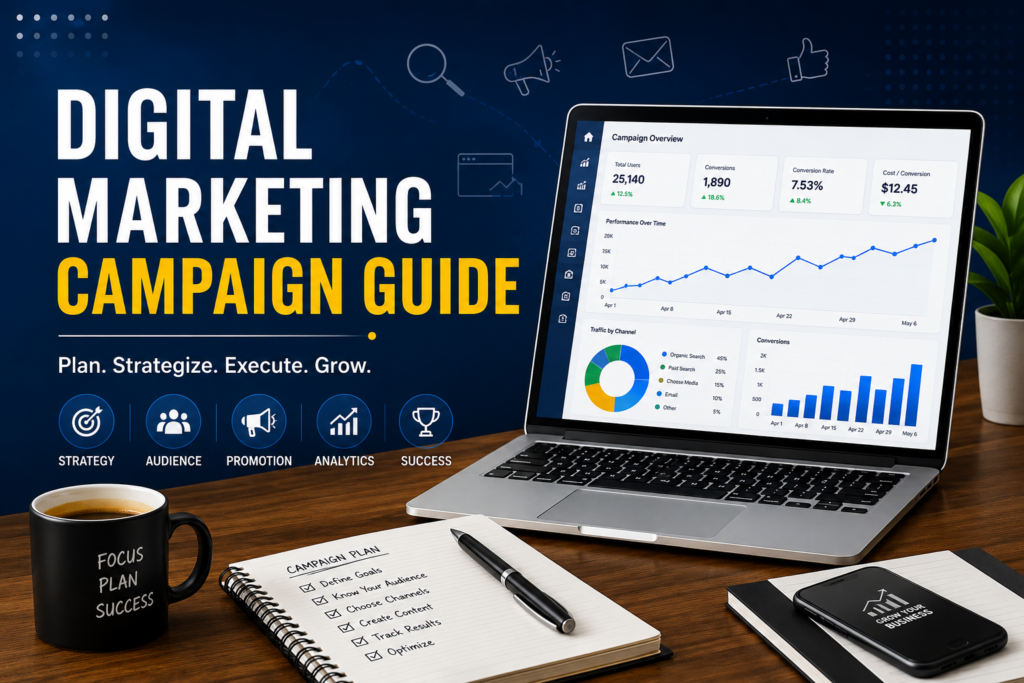
A successful campaign often combines several marketing methods, including:
- Search Engine Optimization
- Content Marketing
- Meta Ads
- Google Ads
- Email Marketing
- Social Media Marketing
- Website Analytics
Instead of focusing on a single platform, a well planned campaign connects multiple channels to reach potential customers at different stages of their buying journey.
Why Campaign Planning Matters
Launching ads or publishing content without a strategy often leads to poor results and unnecessary spending.
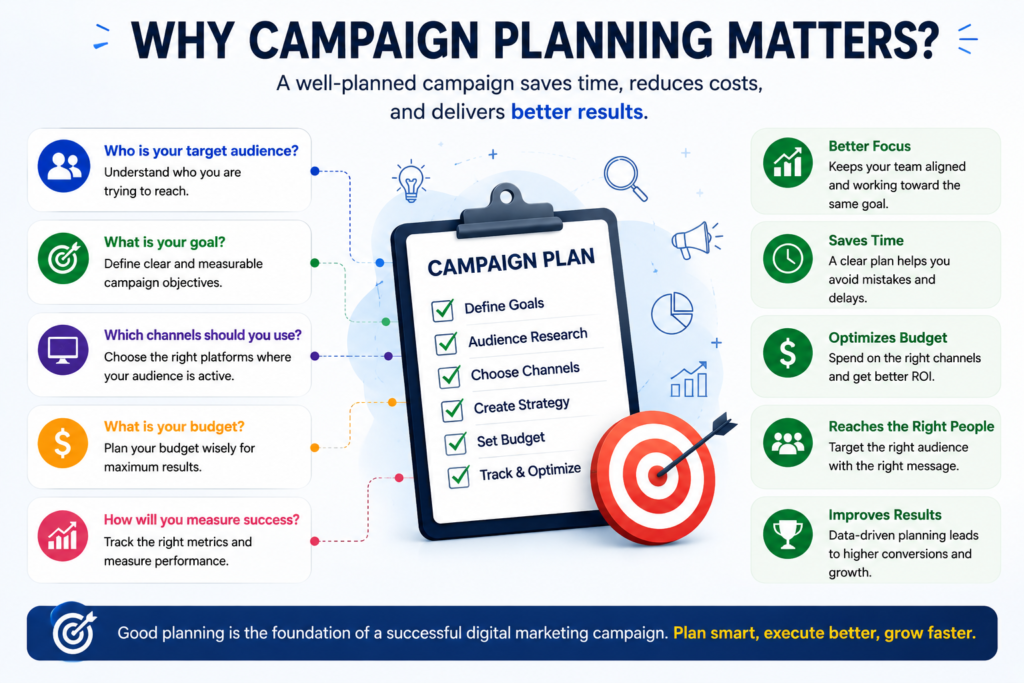
Before starting a campaign, ask yourself:
- Who is your target audience?
- What business goal do you want to achieve?
- Which marketing channel fits your audience?
- What budget can you invest?
- Which metrics will measure success?
Answering these questions helps create a focused strategy and improves campaign performance.
How to Create a Digital Marketing Campaign
Set a Clear Goal
Every campaign should begin with one measurable objective.
Examples include:
- Increase qualified leads
- Generate online sales
- Grow website traffic
- Build brand awareness
- Collect email subscribers
A clear goal helps you measure progress and make better decisions
Research Your Audience
Understanding your audience is one of the most important steps.
Study factors such as:
- Age
- Interests
- Search behavior
- Pain points
- Buying intent
For example, a local restaurant requires a different marketing approach than a software company because their customers search differently and expect different information.
Perform Keyword Research
Keyword research helps you understand what your audience is searching for.
Besides targeting digital marketing campaign, include relevant search terms naturally, such as:
- How to create a digital marketing campaign
- Digital marketing strategy
- Campaign planning
- Online marketing
- Search engine optimization
Choosing keywords based on search intent usually produces better long term results than targeting only high search volume terms.
Create Valuable Content
Helpful content builds trust and supports SEO.
Useful content formats include:
- Blog posts
- Case studies
- Tutorials
- Checklists
- Videos
- Landing pages
Content should answer real questions instead of focusing only on promotion.
Choose the Right Marketing Channels
Different channels serve different purposes.
- SEO supports long term organic growth.
- Meta Ads help reach targeted audiences quickly.
- Google Ads capture users with strong buying intent.
- Email Marketing improves customer retention.
- Content Marketing builds authority and trust.
Choose channels based on your audience instead of trying to use every platform.
Measure Campaign Performance
Tracking results helps improve future campaigns.
Important metrics include:
- Organic traffic
- Conversion rate
- Click through rate
- Cost per lead
- Return on ad spend
- Bounce rate
Review these metrics regularly and adjust your strategy based on real performance data.
Real World Example
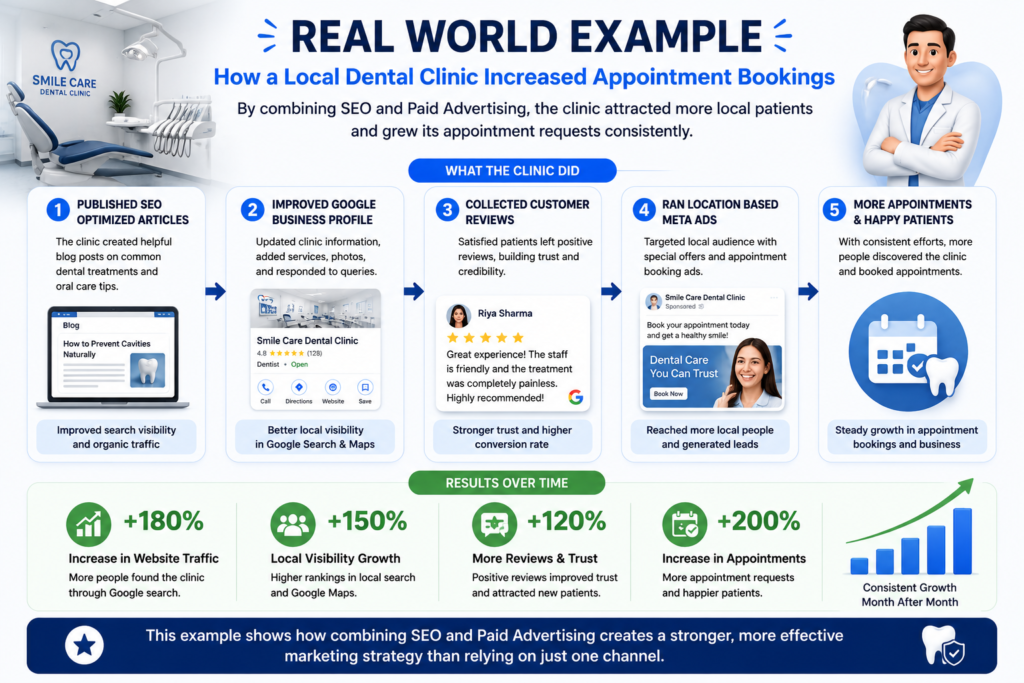
Imagine a local dental clinic wants to increase appointment bookings.
The clinic publishes SEO optimized articles about common dental treatments, improves its Google Business Profile, collects customer reviews, and runs location based Meta Ads.
Over time, website traffic increases, more local customers discover the clinic through search engines, and appointment requests grow steadily. This example shows how combining SEO and paid advertising creates a stronger marketing strategy than relying on only one channel.
Common Mistakes
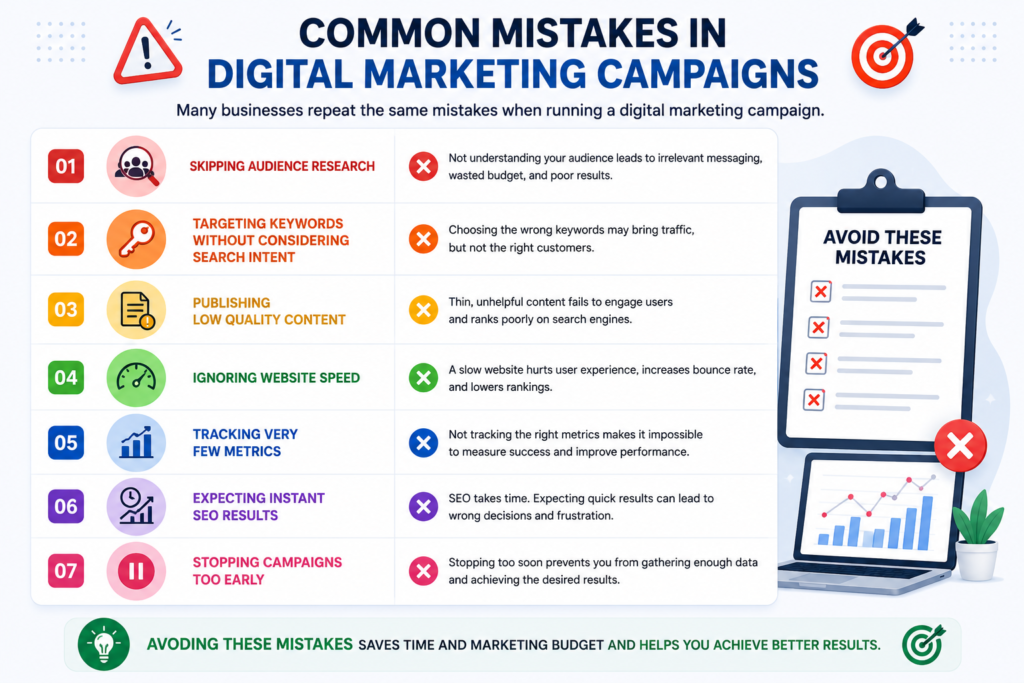
Many businesses repeat the same mistakes when running a digital marketing campaign.
- Skipping audience research
- Targeting keywords without considering search intent
- Publishing low quality content
- Ignoring website speed
- Tracking very few metrics
- Expecting instant SEO results
- Stopping campaigns too early
Avoiding these mistakes saves time and marketing budget.
Best Practices
Follow these recommendations to improve campaign performance.
- Set realistic and measurable goals.
- Understand your audience before creating content.
- Publish useful and original content regularly.
- Optimize your website for mobile users.
- Improve page speed and user experience.
- Update older content when needed.
- Review analytics every month.
- Test landing pages before increasing advertising budgets.
- Focus on solving customer problems instead of chasing rankings.
What is a digital marketing campaign?
A digital marketing campaign is a planned marketing effort that uses online channels to achieve goals such as increasing traffic, generating leads, or improving sales.
How do I create a digital marketing campaign?
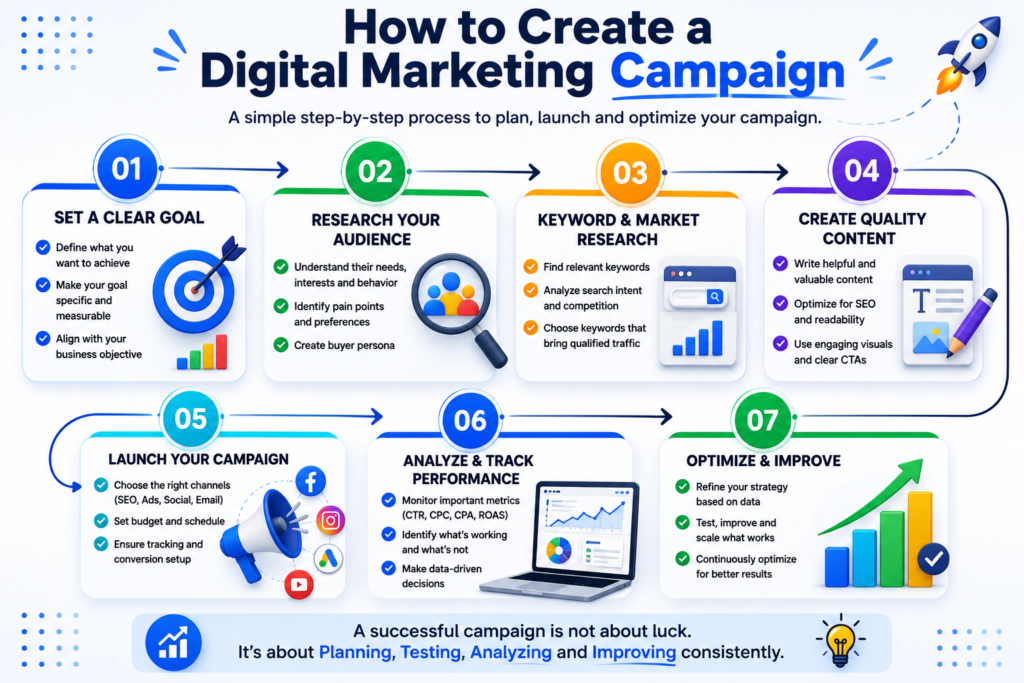
Start by setting a clear goal, researching your audience, selecting relevant keywords, creating valuable content, choosing the right marketing channels, and measuring performance.
Why is SEO important in a digital marketing campaign?
SEO helps attract organic traffic, improves website visibility, and supports long term growth without depending entirely on paid advertising.
Which marketing channel is best for a digital marketing campaign?
There is no single best channel. SEO, Meta Ads, Google Ads, Email Marketing, and Content Marketing all serve different purposes. The right choice depends on your audience and business goals.
How long does it take to see results from a digital marketing campaign?
Paid campaigns can generate results within days, while SEO usually requires several months of consistent work before noticeable improvements appear.
What are the most important metrics to track?
The most useful metrics include organic traffic, conversion rate, click through rate, cost per lead, return on ad spend, bounce rate, and user engagement.
Conclusion
A successful digital marketing campaign is built on careful planning, audience research, valuable content, and continuous improvement. Businesses that understand customer needs, measure performance, and refine their strategy over time are more likely to achieve sustainable growth. Rather than looking for quick wins, focus on creating a campaign that delivers value to users while supporting your long term business goals.
Call to Action
If you found this guide helpful, explore more articles on SEO, content marketing, and performance marketing to strengthen your digital marketing knowledge and apply practical strategies to your own campaigns.